
“`html
Why Do Composite Decking Are Hollow in Middle
Introduction
Composite decking has become increasingly popular for outdoor living spaces due to its durability, low maintenance, and aesthetic appeal. One distinctive feature of many composite decking boards is their hollow center. This article explores the manufacturing process behind composite decking with a hollow center and discusses the benefits this design offers, including weight reduction, enhanced flexibility, and cost savings while maintaining structural integrity.
Manufacturing Process of Composite Decking
The production of composite decking involves mixing recycled wood fibers and plastic materials, often high-density polyethylene (HDPE), to create a durable and weather-resistant product. The process begins with blending these raw materials into a homogeneous mixture, which is then extruded through a die to form the desired shape and size of the decking board. During this extrusion process, the core of the board is designed to be hollow, contributing to several key advantages.
Designing the Hollow Core
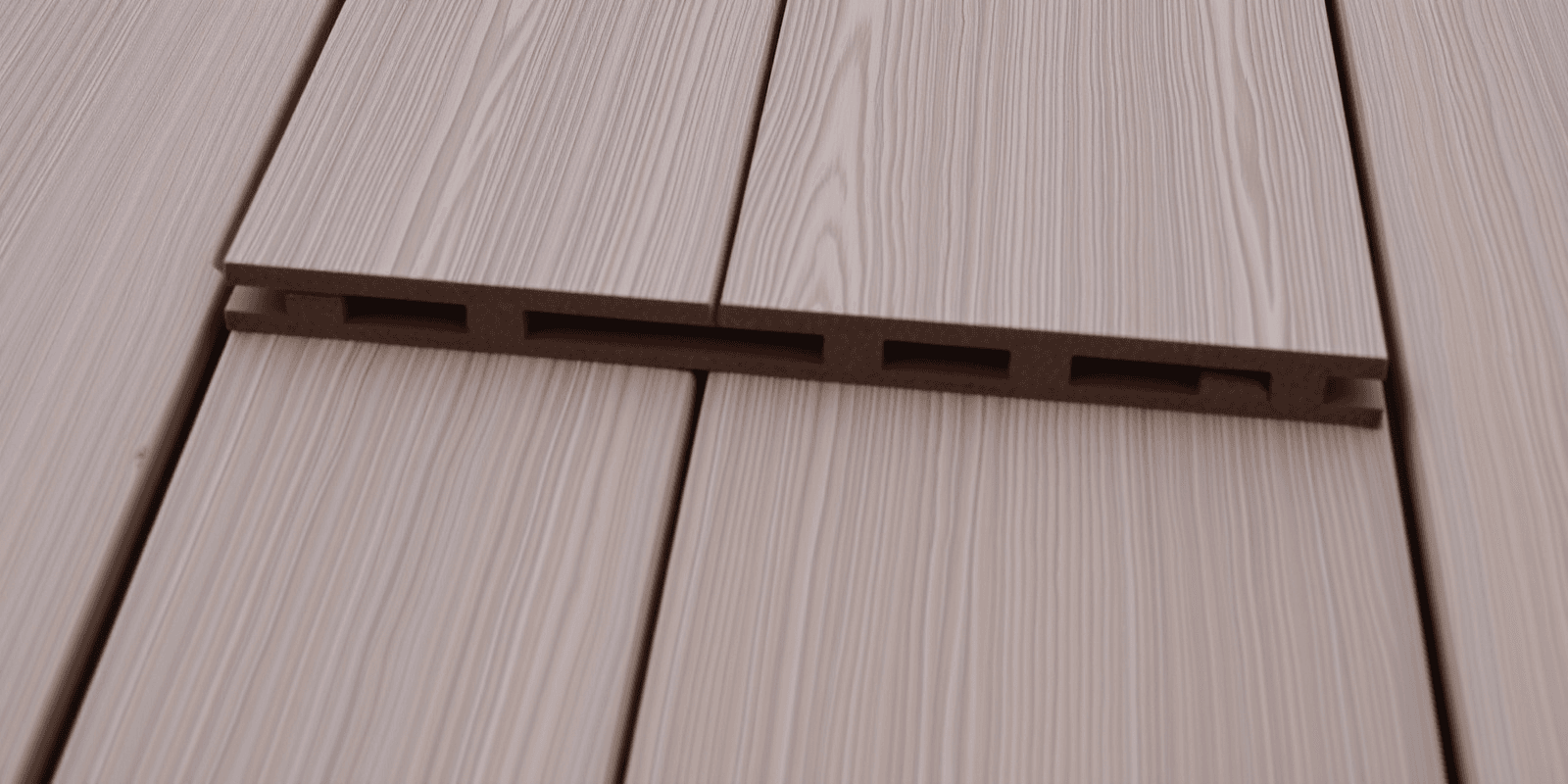
The hollow core design is achieved by using specialized extrusion dies that create a hollow space within the board during the manufacturing process. This hollow center can vary in size and shape depending on the specific manufacturer’s design and the intended use of the decking material.
Benefits of Hollow Composite Decking
Weight Reduction
One of the primary benefits of a hollow center is weight reduction. By removing material from the center of the board, manufacturers can reduce the overall weight of the decking without compromising its strength or stability. This makes installation easier and reduces shipping costs, ultimately lowering the overall cost of the project.
Enhanced Flexibility
The hollow core also provides enhanced flexibility, which is particularly beneficial in regions with fluctuating temperatures. The hollow design allows the board to expand and contract more easily with temperature changes, reducing the risk of warping or cracking compared to solid alternatives.
Cost Savings
While the hollow center itself doesn’t directly lower the cost of raw materials, it does allow for more efficient use of resources. The reduced material requirement can lead to cost savings in both production and transportation, making the final product more affordable for consumers.
Maintaining Structural Integrity
Despite the hollow center, composite decking maintains its structural integrity thanks to the reinforced outer shell and the high-quality materials used in its construction. The combination of wood fibers and plastic creates a strong, durable surface that resists moisture, insects, and UV damage, ensuring longevity even in harsh outdoor conditions.
Conclusion
The hollow center in composite decking is not just a design choice but a strategic engineering decision that offers multiple benefits. From weight reduction and enhanced flexibility to cost savings and structural integrity, the hollow core contributes significantly to the overall performance and value of composite decking. As technology advances, we can expect further innovations that continue to improve the functionality and sustainability of this popular building material.
“`