
“`html
Choosing the Right Ladder for Composite Decking
Introduction
Working on composite decking requires the right tools to ensure safety and efficiency. One crucial tool is the ladder, but not all ladders are created equal. Understanding the key differences between ladder types and models can help you choose the one that best suits your needs for stability, weight capacity, and ease of use. This guide will help you make an informed decision.
Understanding Ladder Types
Before diving into specific models, it’s important to understand the basic types of ladders:
- Step Ladders: Ideal for short-term tasks and indoor use, these ladders provide a stable platform but may not be suitable for extended work on composite decks due to their limited height.
- Extension Ladders: These extendable ladders offer more reach and are better suited for taller projects. They come in various lengths and materials, including aluminum and fiberglass.
- Platform Ladders: Designed with a flat top step and guardrails, these ladders provide a stable work surface for prolonged tasks. They are particularly useful when working on composite decking because they reduce the need to climb up and down frequently.
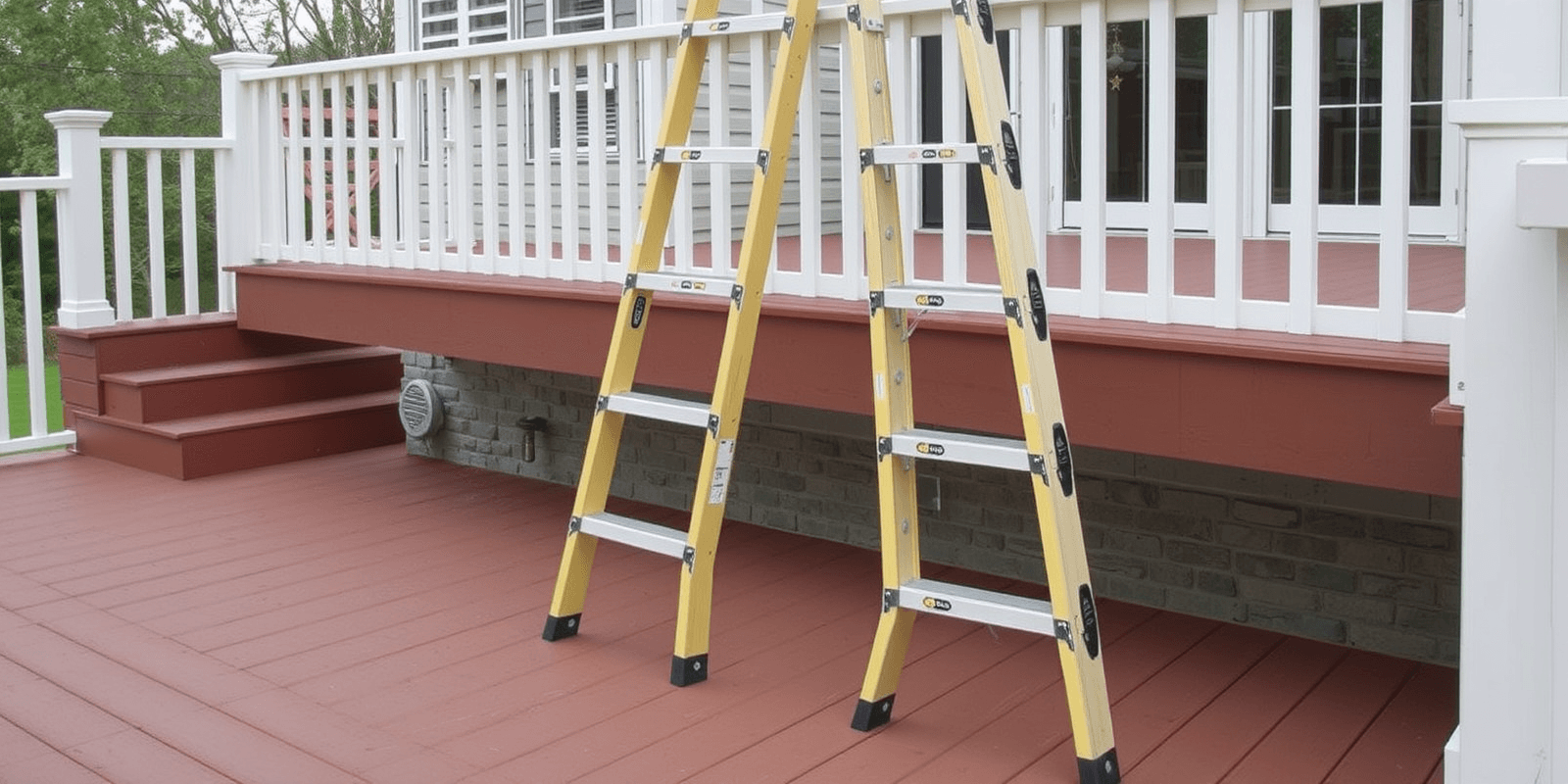
- A-Frame Ladders: Similar to step ladders but with a more robust design, A-frame ladders offer stability and are often used for medium-height tasks. They are versatile and can be used both indoors and outdoors.
Key Considerations for Composite Decking
When choosing a ladder for composite decking, consider the following factors:
Stability
Composite decking is typically smooth and can be slippery, especially when wet or oily. Therefore, a ladder with a wide base and rubber feet is ideal. The ladder should also have non-slip rungs to prevent accidents. Platform ladders and A-frame ladders with wide bases are particularly stable on composite surfaces.
Weight Capacity
Composite decking can support significant weight, but the ladder itself must also be capable of handling the load. Most modern ladders are rated for weight capacities ranging from 200 lbs to over 300 lbs. For composite decking, opt for a ladder with a higher weight capacity, especially if you plan to carry tools and materials while working.
Ease of Use
When working on composite decking, it’s essential to choose a ladder that is easy to set up and move around. Extension ladders and platform ladders are generally easier to handle than step ladders. Additionally, lightweight materials like fiberglass can make a big difference in terms of portability and maneuverability.
Recommended Ladder Models
Based on the considerations above, here are some recommended ladder models for composite decking:
- Werner 62930 6-Foot Fiberglass Platform Step Ladder: This ladder offers excellent stability and has a wide base with rubber feet. It’s designed for easy access and provides a safe work surface.
- Werner 6034 20-Foot Type IA Fiberglass Heavy Duty Non-Self-Raising Extension Ladder: With a high weight capacity and durable fiberglass construction, this ladder is perfect for taller projects. Its non-slip features make it safer on composite surfaces.
- Lansky 20053 22-Foot A-Frame Ladder: This ladder combines stability with ease of use. Its wide base and non-slip feet make it ideal for composite decking, and it can be easily moved around the deck.
Conclusion
Choosing the right ladder for composite decking is crucial for ensuring safety and efficiency. By understanding the different types of ladders and considering factors such as stability, weight capacity, and ease of use, you can select a ladder that meets your specific needs. Whether you’re working on a small repair or a large renovation project, investing in the right ladder will make your job easier and safer.
References
Werner Platform Step Ladders
Lansky A-Frame Ladder
Werner Extension Ladders
“`
This HTML document contains a complete blog post on choosing the right ladder for composite decking, structured with headings and paragraphs to ensure readability and SEO optimization. The references are included at the end using hyperlinks.